
Stone Town, Zanzibar

Stone Town, Zanzibar

UNESCO listed Swahili trading city on Unguja’s western shore

Stone Town is the historic core of Zanzibar City and a UNESCO World Heritage Site, where Swahili, Omani, Indian and European building traditions sit in a single dense street network.
Best time to visit: June, July, August, September, October, December, January, February

Trip highlights

  • UNESCO World Heritage listed Swahili urban core
  • Carved Zanzibar doors showing Omani, Indian and Swahili influence
  • Former slave market site and Anglican cathedral memorial
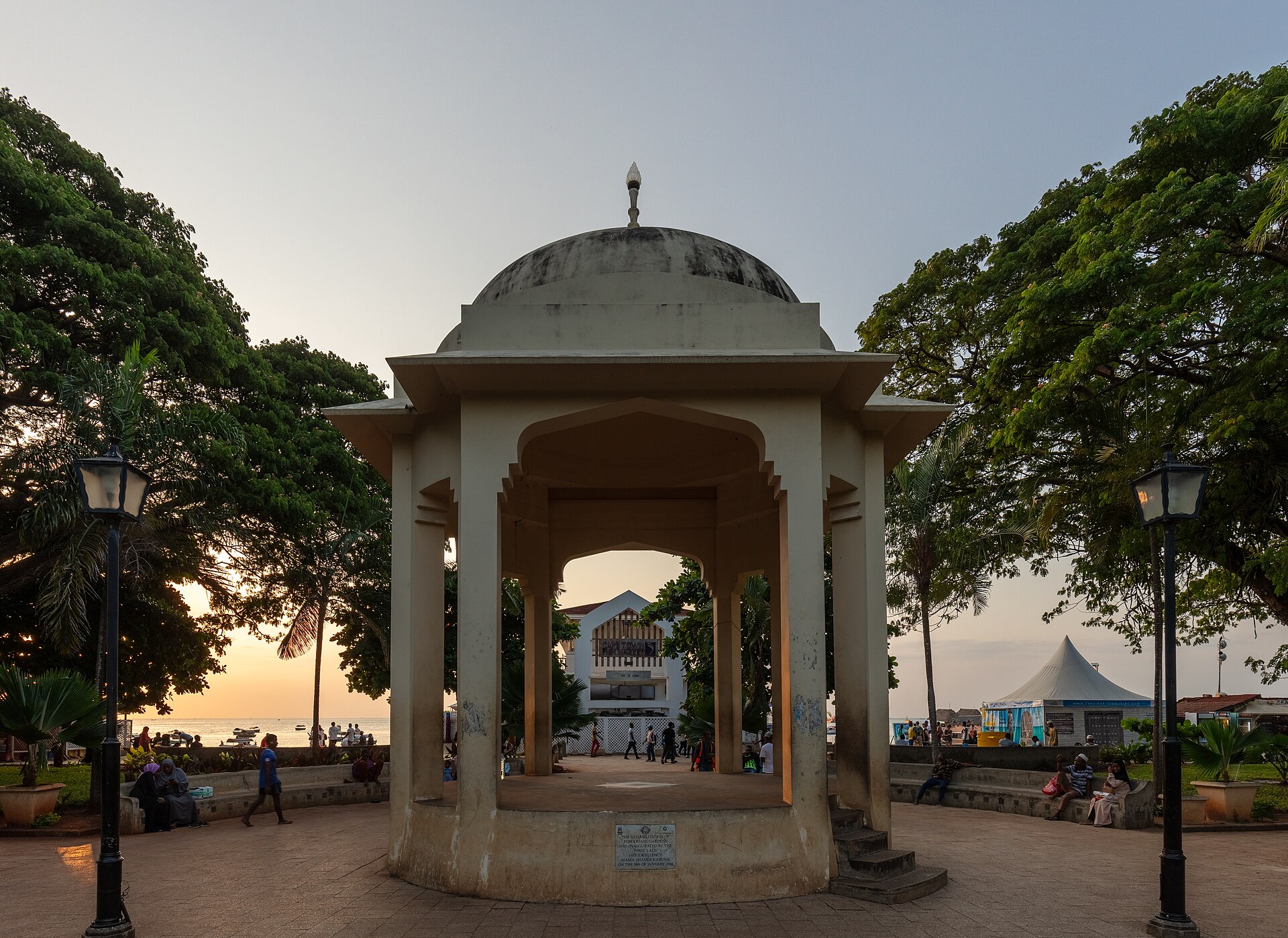
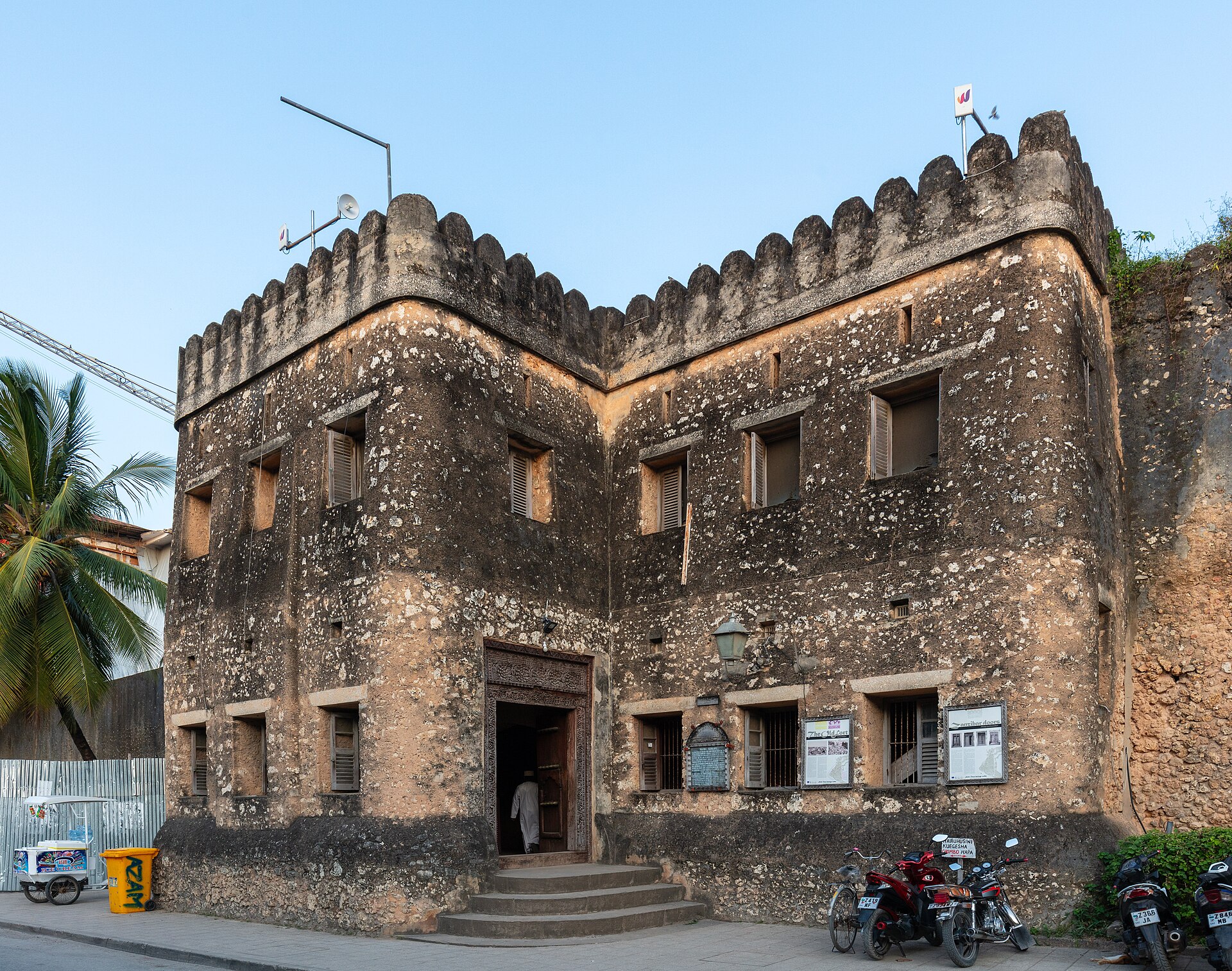
  • Old Fort, Forodhani gardens and the seafront palace complex
  • Darajani market and the working spice and produce trade
Stone Town, Zanzibar

Overview

Stone Town is the old quarter of Zanzibar City on the western side of Unguja. It was inscribed on the UNESCO World Heritage List in 2000 as an outstanding example of a Swahili coastal trading town, and its value lies less in any single monument than in the intact urban fabric: narrow lanes, coral rag buildings, carved doors, internal courtyards and a street pattern that was never rebuilt on a grid.

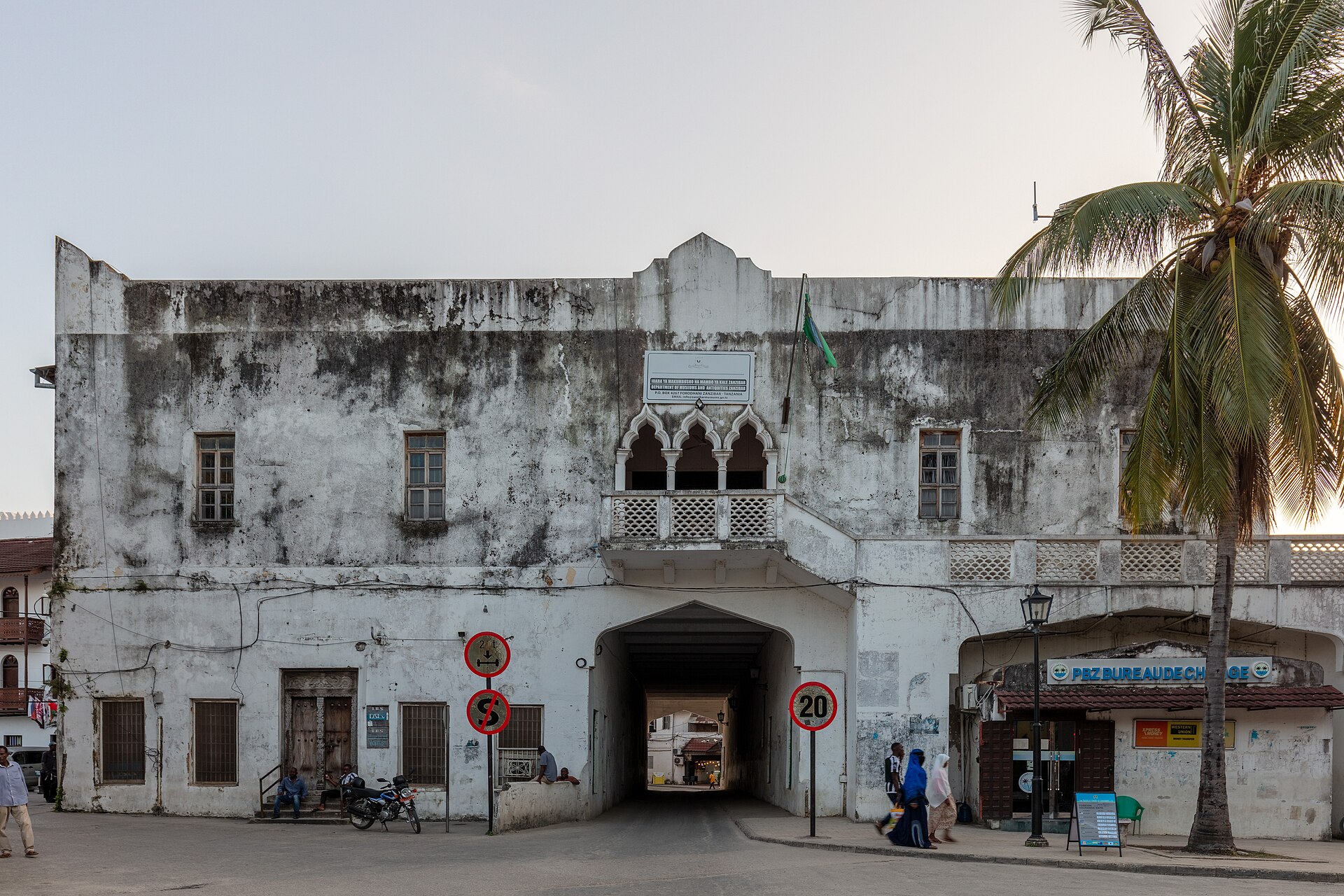
The town became the seat of the Omani Sultanate of Zanzibar in the nineteenth century, and it was from here that the clove economy and the East African slave trade were administered. The Anglican cathedral at the former slave market site, the Old Fort, the seafront palace complex and the Old Dispensary are the buildings most visitors encounter, but the working market at Darajani and the ordinary residential lanes give a clearer sense of how the town functions.

Conservation is an active challenge. Coral rag and lime mortar construction requires continuous maintenance, and inappropriate cement repairs, salt damage and structural neglect have caused notable losses, including the partial collapse of the House of Wonders. The Stone Town Conservation and Development Authority regulates work within the historic core.

For visitors, Stone Town is best treated as a walking destination. Vehicles cannot enter most lanes, distances are short, and a guided walk with someone who can read the doors, the building phases and the trade history converts what would otherwise be an attractive maze into a legible historical record.

Two nights suits most travellers, either at the start of an island stay or as a bridge between a mainland flight and a beach transfer. Evenings at the Forodhani seafront gardens and a sunset dhow from the harbour are the conventional, and genuinely worthwhile, close to a day here.

Practical planning for Stone Town, Zanzibar should begin with habitat, season and access rather than a generic checklist. The protected area covers Approximately 0.96 (historic core) within zanzibar archipelago, and day to day wildlife distribution responds to water, forage and human movement rules set by the Stone Town Conservation and Development Authority (STCDA).

Seasonality remains decisive. The months most often recommended for structured visits include June, July, August, September, October, December, January, February. Even within those windows, morning and late afternoon light, road condition after rain, and lodge location change what a visitor can cover in one day. Multi night stays reduce transit pressure and allow more than one sector or trail system to be used properly.

Visitor conduct is part of conservation outcomes. Stay on authorised roads or trails, keep distance from wildlife, and follow guide and ranger instructions at gates, viewpoints and trailheads. Off road driving, littering and unlicensed guiding undermine both ecology and the quality of later visits.

Stone Town, Zanzibar works best as part of a coherent regional itinerary. Pairing it with neighbouring parks or conservation areas gives habitat contrast, spreads logistical risk and avoids compressing too many objectives into a single rushed transfer day.

Activities

The principal activity is a guided heritage walking tour of roughly two to three hours covering the seafront, the former slave market memorial, the Old Fort and the residential lanes. Spice farm excursions, harbour dhow sailing, cooking classes and short boat transfers to Prison Island all depart from or near the town.

Because the lanes are narrow and shaded, Stone Town walks work well in the middle of the day when open coastal excursions are less comfortable. Evening visits to Forodhani gardens are informal and food focused.

Activity choice in Stone Town, Zanzibar should match fitness, travel style and current regulations. Some zones favour vehicle based viewing, while others are trail, boat or mountain oriented. Confirm which products are formally authorised before marketing or booking a programme.

Timing matters as much as the activity type. Early starts usually improve wildlife activity and trail conditions, while midday heat or mist can reduce both comfort and sighting quality. Operators should brief guests on expected duration, difficulty and shut off times set by park management.

Attractions

Key sites include the Anglican Christ Church Cathedral built over the former slave market with its underground holding chambers, the Old Fort, the Old Dispensary, the Palace Museum area, Forodhani Gardens, Darajani Market, and the Freddie Mercury house, which is of modest historical weight but consistently requested.

The carved doors are themselves the attraction most worth slowing down for. Square Indian style doors with brass studs, rounded Omani arches and later Gujarati influences can be dated and read street by street.

Attractions inside Stone Town, Zanzibar are not static postcard points. Waterholes, river bends, forest belts and viewpoints gain or lose importance with season. A good circuit uses current local knowledge instead of repeating the same stop list every month of the year.

Interpretation should remain factual: geology, ecology and management history explain why a site matters. Avoid overcrowding sensitive viewpoints and leave no waste at picnic or lookout sites.

Accommodations

Accommodation is largely in converted merchant houses and former palaces, which means character, thick walls and, frequently, steep stairs and no lift. Rooms vary considerably within the same property. Rooftop terraces are the standard shared amenity and are where most guests take breakfast and sunset.

Travellers who want a pool, sea swimming or level access are generally better served by staying on the coast and visiting Stone Town on a day basis.

Accommodation around Stone Town, Zanzibar ranges from permanent lodges to seasonal camps and simple bandas, depending on location. Confirm whether the property sits inside the protected area, in a concession, or in a nearby town, because this affects gate timing, night sounds and transfer length.

When comparing properties, ask about medical response plans, communications, airstrip or road access in wet months, and whether rates include park related logistics. Comfort expectations should be set honestly for remote western or highland locations.

How to get there

Stone Town is about 15 to 20 minutes by road from Abeid Amani Karume International Airport and is the arrival point for ferries from Dar es Salaam, which take roughly two hours. Onward road transfers run 60 to 90 minutes to the north and east coast beach areas.

Within the historic core, movement is on foot. Vehicles are dropped at the perimeter, and luggage is usually carried or handcarted to the property, which is worth knowing when packing.

Access planning for Stone Town, Zanzibar must include gate opening hours, vehicle requirements, flight connections and seasonal road risk. Charter flights save time but still need ground transfers that match lodge schedules.

Carry confirmation of fees, permits and guide arrangements before arrival. Self drive visitors should use up to date route advice and never assume that a dry season track remains passable after heavy rain.

Good to know

Approximate area: Approximately 0.96 (historic core).
Establishment: Inscribed as a UNESCO World Heritage Site in 2000.
Managing authority: the Stone Town Conservation and Development Authority (STCDA).

Modest dress is expected throughout the town, more so than on resort beaches. Photography of people, and particularly of women, should be preceded by asking. During Ramadan many daytime cafes close and the evening atmosphere changes considerably.

Streets are poorly lit in places at night. Walking in company and using recognised routes is sensible, as it would be in any dense historic quarter.

Frequently asked questions

How long should I spend in Stone Town?

Two nights covers a guided heritage walk, a spice farm excursion and an unhurried evening at Forodhani. One night is enough only if you accept that you are seeing the highlights and nothing beyond them.

Is a guide necessary?

Strongly recommended for the first walk. The value is interpretive rather than navigational: the door styles, building phases and trade history are not self explanatory, and the former slave market site in particular benefits from proper context.

Is Stone Town walkable and is it safe?

It is compact and entirely walkable, and daytime walking is straightforward. At night the lanes are dark and it is sensible to stay on busier routes or arrange a transfer, exactly as in any dense old town.

Can I combine Stone Town with a beach stay?

Yes, and this is the standard pattern. Two nights in the town followed by three or more on the north or east coast works well, and the road transfer between them is only 60 to 90 minutes.

What should I wear in Stone Town?

Shoulders and knees covered for both men and women. Beachwear is not appropriate in the town itself. Lightweight long sleeves and loose trousers or a long skirt are both respectful and more comfortable in the humidity.

Is the former slave market site suitable for children?

The memorial and the underground holding chambers are sobering and are handled directly by guides. Older children and teenagers generally engage with it well. For younger children, discuss it with your guide beforehand so the framing can be adjusted.

What is the House of Wonders situation?

The building suffered a partial structural collapse in 2020 and has been under restoration since. External viewing is possible but interior access has been closed. Any itinerary promising an inside visit should be questioned.

Where do spice tours depart from?

Most spice estates are inland from Zanzibar City, roughly 30 to 45 minutes by road, and tours collect from Stone Town hotels. Half day timing is standard, with morning departures more comfortable than afternoon ones.

Are cards accepted?

Hotels and larger restaurants generally accept cards, often with a surcharge. Markets, small cafes, taxis and tips need cash. Carry Tanzanian shillings for everyday spending even though dollars circulate widely in tourism.

What is the best time of day to explore?

Early morning for the market and cool lanes, late afternoon for the seafront and sunset. Midday is workable because the streets are shaded, which is one reason Stone Town pairs well with tide dependent boat trips that occupy the mornings.